
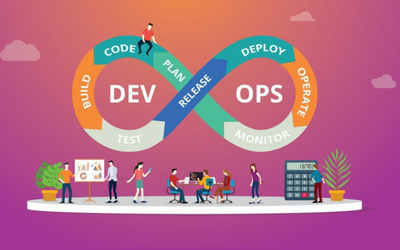
Join our hands-on DevOps course and unlock the secrets to seamless collaboration between development and operations. Learn industry-standard tools like Docker, Kubernetes, Jenkins, and more to automate workflows, improve efficiency, and deploy with confidence. Whether you’re a beginner or looking to upskill, our practical approach will prepare you to excel in one of the most in-demand fields today.
Ready to bridge the gap between coding and operations? Enroll now and fast-track your path to becoming a DevOps expert!
Click the Button to download syllabus
Step into one of the fastest-growing fields in tech! DevOps professionals are highly sought after by top companies worldwide, offering roles like DevOps Engineer, Cloud Architect, Site Reliability Engineer, and Automation Specialist. With skills in tools like Docker, Kubernetes, and CI/CD pipelines, you’ll be at the forefront of driving innovation and efficiency in software delivery.
Whether you aim to work with startups, tech giants, or global enterprises, DevOps expertise opens doors to exciting, high-paying opportunities. Start your journey now, and position yourself as a key player in the digital transformation era!
Introduction to DevOps: This section of the course will provide you with a thorough understanding of DevOps and its principles. You will learn how DevOps can help your organization improve its software development process by bringing together software development and IT operations teams to work in collaboration. You will learn about the key benefits of DevOps and how it can help you deliver software faster and more efficiently.
Continuous Integration and Deployment: In this section of the course, you will learn how to automate the build, test, and deployment process using tools such as Jenkins and Git. You will learn how to integrate the different stages of software development and deployment into a single automated pipeline. This will help you improve the quality of your code and accelerate the delivery of your software to your customers.
Configuration Management: Configuration management is a critical component of DevOps, and this section of the course will teach you how to use tools such as Puppet, Chef, and Ansible to automate infrastructure. You will learn how to manage and configure servers, applications, and other resources using code. This will help you reduce the time and effort required to deploy and manage your infrastructure.
Containerization and Orchestration: Containerization is a key technology in modern software development, and this section of the course will teach you how to use Docker to containerize your applications. You will also learn about container orchestration using Kubernetes, which will help you manage and scale your containers more effectively.
Cloud Computing: This section of the course will provide you with an introduction to cloud computing concepts and services, with a focus on AWS and Azure. You will learn how to provision and manage cloud resources using these platforms, and how to deploy and run your applications in the cloud.
Monitoring and Logging: Monitoring and logging are critical components of DevOps, and this section of the course will teach you how to use tools such as Nagios, Zabbix, and ELK to monitor and log your applications and infrastructure. You will learn how to set up alerts, troubleshoot issues, and optimize performance.
DevOps Culture: DevOps is not just about tools and technology, but also about culture and practices. This section of the course will teach you about the key elements of DevOps culture, including collaboration, communication, and continuous improvement. You will learn how to build a culture of trust, respect, and innovation in your team.
Collaboration and Communication: Effective collaboration and communication are essential for successful DevOps. This section of the course will teach you how to use tools such as Slack and JIRA to collaborate and communicate effectively with your team. You will learn how to improve team productivity, reduce errors, and accelerate delivery.
Security: Security is a critical aspect of DevOps, and this section of the course will teach you how to secure your DevOps environment and protect sensitive data. You will learn about best practices for security and compliance, including identity and access management, encryption, and network security. You will also learn how to incorporate security into your DevOps processes and culture.

Empowering learners with industry-leading tech skills. As an ISO-certified organization, we are committed to delivering high-quality, hands-on training with real time projects . Join us and take the next step in your tech career!
©2025. All Rights Reserved By YSM INFOTECH